2026-08-21 ·
How Paducah Homeowners Can Prepare Metal Roofs for Ohio River Flooding
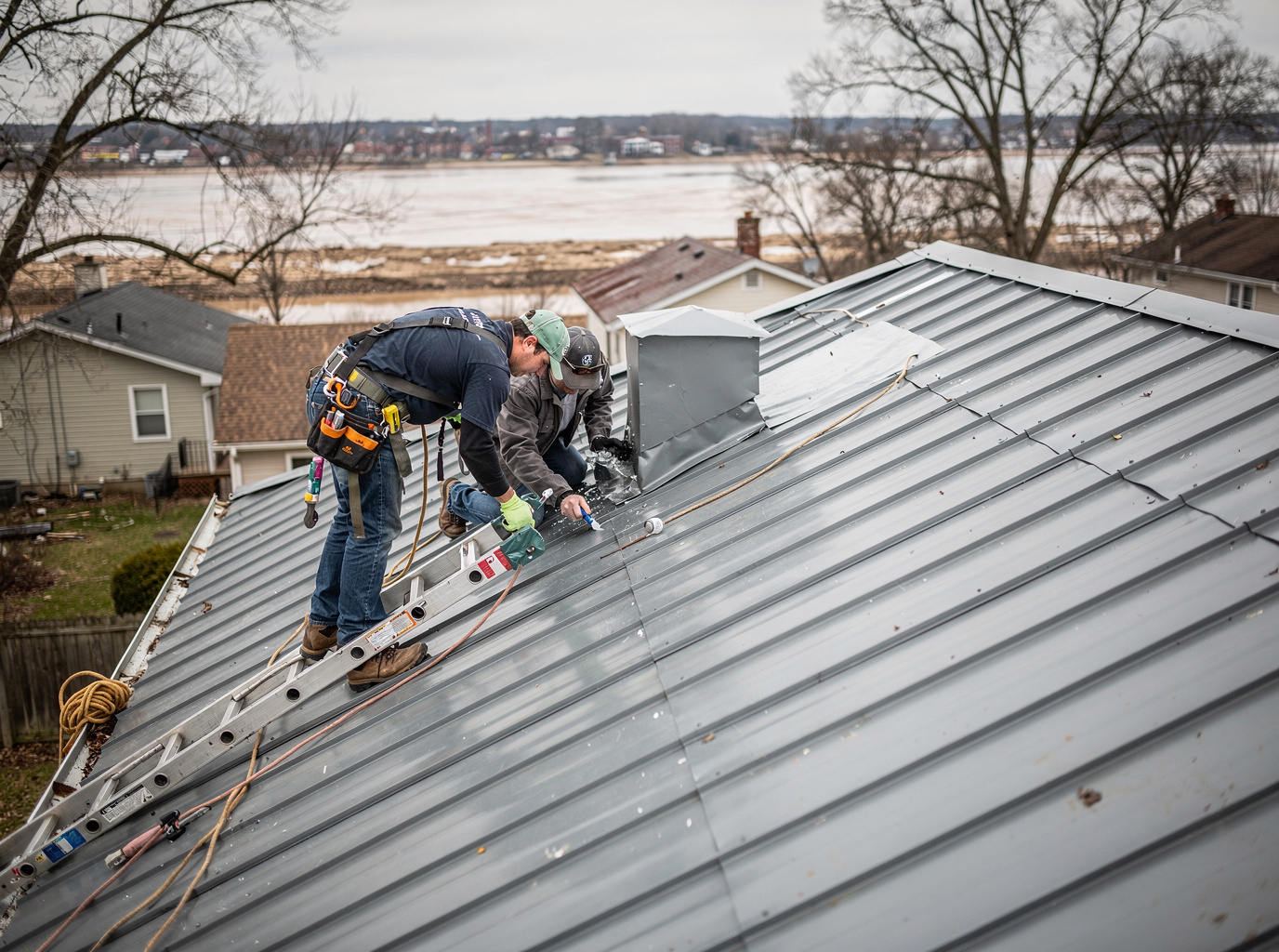
Preparing a metal roof for Ohio River flooding in Paducah means checking three things before spring rains arrive: fastener tightness, flashing seals at roof-to-wall transitions, and clear drainage paths so water moves off the roof and away from the foundation instead of pooling against it. Homes in low-lying spots near Downtown Paducah and along the riverfront face a double threat — rising groundwater from below and heavy rainfall from above — and a roof that's tight and well-drained keeps water from adding to what's already coming up through crawl spaces and basements. Most of this prep takes half a day and costs far less than dealing with interior water damage after the fact.
Why Flooding Season Stresses a Metal Roof Beyond Water Levels
Ohio River flooding in McCracken County usually arrives with saturated ground, sustained rain, and wind gusts ahead of the front — not just standing water. A metal roof itself rarely floods, but the same weather system that raises the river drives water sideways under panels at weak seams and forces it through any gap around chimney flashing or roof penetrations. Homes in Northside and West Paducah on older foundations sometimes see soil shift as ground saturates, which can rack a roof structure just enough to open a seam that was fine the year before. Add Paducah's humid subtropical summers building up moisture in attic spaces beforehand, and you've got wood decking that's already softer than it should be when flood season stress hits. The roof's job during flooding isn't to stop the river — it's to keep the house dry from above while everything else is fighting water from below.
Pre-Flood Season Inspection Checklist
A thorough check before spring rains takes about 45–60 minutes on most Paducah homes:
- Fastener check — screws backing out or showing rust streaks are early failure points; re-torque or replace with matching gasketed screws
- Flashing seams — inspect around chimneys, vent pipes, and where roof meets wall, especially on additions common in Lower Town Arts District homes
- Ridge cap and hip seams — these take the most wind-driven rain during frontal systems
- Gutter and downspout flow — confirm water exits at least 4–6 feet from the foundation
- Panel overlap direction — verify laps face away from prevailing wind and slope correctly toward drainage
If any of these turn up loose fasteners, cracked sealant, or gaps you can see daylight through, it's worth scheduling a metal roofing inspection rather than guessing. Small issues found in February are a $150–$400 fix; the same issues ignored through a flood event can mean soaked insulation and drywall repair running into the thousands.
Drainage and Grading Matter as Much as the Roof
A tight roof doesn't help if the water it sheds has nowhere to go. Many older homes near the Paducah Mall area and Downtown Paducah were built before modern stormwater grading standards, so downspouts often dump water right next to the foundation instead of channeling it away. During heavy Ohio River flood events, that extra volume compounds groundwater already pushing up from below, and it can back up under roof edges at the eaves. Extending downspouts with solid pipe out to a swale or the street, and making sure splash blocks aren't clogged with sediment from the past season's storms, is a low-cost step homeowners skip constantly. It's also worth checking that roof valleys — especially on homes with additions or dormers — aren't dumping concentrated water into one spot along the gutter line, which accelerates erosion right where you need soil stability most.
Fastener and Seam Failures Are the Usual Flood-Season Culprit
In 8–12 years, exposed-fastener metal roofs in this climate typically need at least one round of fastener replacement, and flood season is when a marginal fastener finally fails. Rubber washers under screw heads dry out and crack under UV exposure through Paducah's hot summers, and once that seal goes, wind-driven rain during a flood-adjacent storm finds its way in fast. Standing seam systems avoid this exposed-fastener weak point entirely since panels are joined mechanically with concealed clips, which is one reason standing seam roofing holds up better through repeated flood-season cycles near the river. If a roof is already past 10 years old with visible fastener wear, it's often more cost-effective to plan a metal roof replacement before flood season rather than patching fastener by fastener each spring.