2026-08-21 ·
Choosing Metal Roof Panels That Handle Western Kentucky Humidity
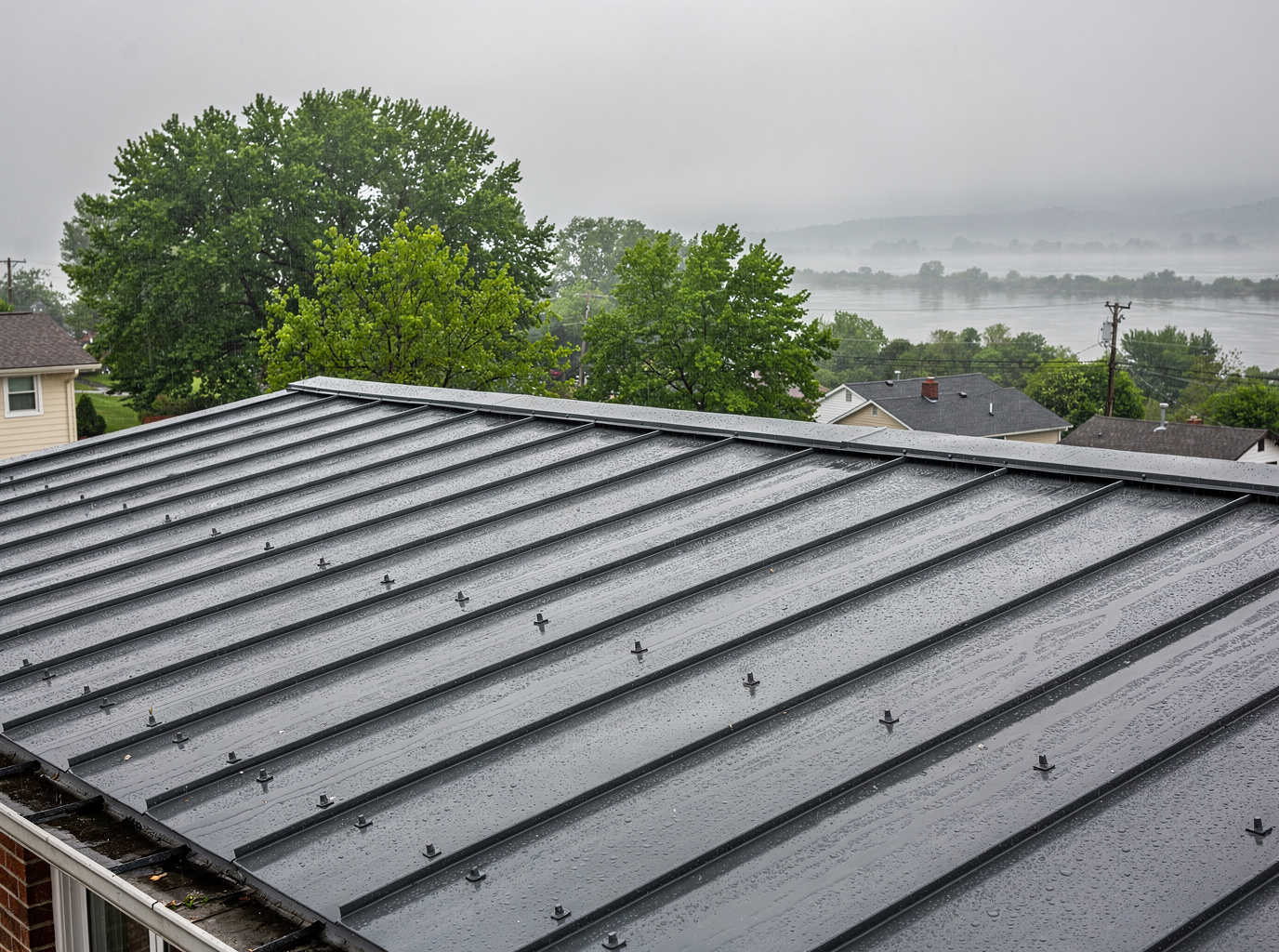
The panels that hold up best against Paducah's humidity are G-90 galvanized steel or Galvalume with a PVDF (Kynar 500) finish, run in 24–26 gauge, with a standing seam profile that keeps water moving instead of sitting in exposed fastener holes. Skip bare galvalume or cheap polyester-coated panels in this climate — they'll show chalking and rust bleed at cut edges within 5–8 years instead of lasting 30–40. After 15 years of installing and repairing roofs from Downtown Paducah to West Paducah, the panel choice matters almost as much as the installation itself, because McCracken County's humid subtropical summers punish any weak point in the coating.
Why Humidity Changes the Panel Equation Here
Paducah sits in a river valley where summer humidity sits high for months, and that moisture doesn't just sit in the air — it condenses on roof decking overnight and lingers under panels that don't ventilate well. Homes near the Ohio River and in older neighborhoods like Lower Town Arts District often have original wood decking that's already absorbed decades of moisture cycling. Pair that with hot afternoons that push metal surface temps well above 140°F, and you get an environment that accelerates any coating breakdown. Panels rated for drier climates in Kansas or Colorado simply don't carry the same corrosion resistance testing that matters in a river town like this.
Coating Types Worth Paying For
- PVDF (Kynar 500/Hylar 5000) — the best fade and chalk resistance, holds color 20+ years even with our UV and humidity combo
- SMP (silicone modified polyester) — a mid-tier option, fine for outbuildings or budget projects but fades faster in full-sun exposures common on Northside rooflines
- Galvalume (uncoated) — acceptable for barns and shops, not ideal for main dwellings where curb appeal and longevity both matter
- G-90 galvanized substrate — a solid base layer under any coating, giving extra zinc protection against the edge rust that shows up first on cut panel ends
For most Paducah homes, PVDF over a Galvalume substrate is the sweet spot between cost and 30–40 year performance.
Gauge and Panel Profile Matter Almost as Much as Coating
Thinner 29-gauge panels are common in cheap re-roof quotes, but they oil-can and dent more easily, and dents create low spots where humidity-driven moisture sits longest. I recommend 24–26 gauge for anything with a 20+ year expectation. Standing seam panels with concealed fasteners outperform exposed-fastener panels in this climate specifically because every exposed screw is a future leak point once the rubber washer degrades from heat and moisture cycling — usually around year 10–15. If you're deciding between panel systems for a full re-roof, standing seam roofing is worth the extra upfront cost in a town where humidity, not snow load, is the main long-term threat.
Ventilation and Underlayment Choices
A good panel on a poorly ventilated roof still fails early. Ridge and soffit venting need to move air continuously, especially on the older housing stock found around Northside and near the Paducah Mall area, where original attic venting was often designed for a different roof system decades ago. I also install a synthetic underlayment with high perm rating rather than old-style felt, since felt breaks down faster under repeated humidity cycling and traps moisture against the deck instead of letting it breathe. This detail rarely shows up in a quote comparison, but it's often the difference between a panel system lasting 25 years versus 40.
Fasteners and Flashing Details
Stainless steel or painted-head fasteners matched to the panel coating prevent galvanic corrosion, which is a bigger issue here than in drier climates because moisture accelerates the reaction between mismatched metals. Flashing around chimneys, skylights, and the dormers common on historic homes near Downtown Paducah needs to be formed from the same coated metal as the field panels — mixing metals at transitions is where I find most humidity-related leaks during a metal roofing inspection. Sealant alone isn't a long-term fix; it's a stopgap until proper step flashing and counterflashing are installed correctly the first time.
What This Means for Repairs vs. Full Replacement
If your existing panels are showing rust bleed only at cut edges or fastener heads, that's often a repair situation, not a full tear-off — patch panels and re-seal fasteners can add years of life. But if the coating is chalking broadly across the field of the roof, or you're seeing rust migrate beyond the edges, the base coating has failed and no amount of caulking fixes that. I've walked plenty of roofs in Mayfield and West Paducah where a homeowner wanted a spot repair, but once the panel coating breaks down system-wide, metal roof repair turns into a stopgap rather than a real solution. For homes with decking already stressed by past flooding, it's worth reading through how flooding affects roof systems along the river before deciding between repair and replacement.
Bottom Line for Paducah Homeowners
Pick PVDF-coated panels over Galvalume or G-90 steel, go 24–26 gauge, use standing seam with concealed fasteners, and don't skip ventilation upgrades during installation — that combination is what actually survives Western Kentucky summers rather than just looking good on day one. We're based in Paducah and run appointments Monday–Friday 8am–6pm and Saturday 9am–2pm if you want a panel and coating recommendation specific to your roof's exposure and pitch.