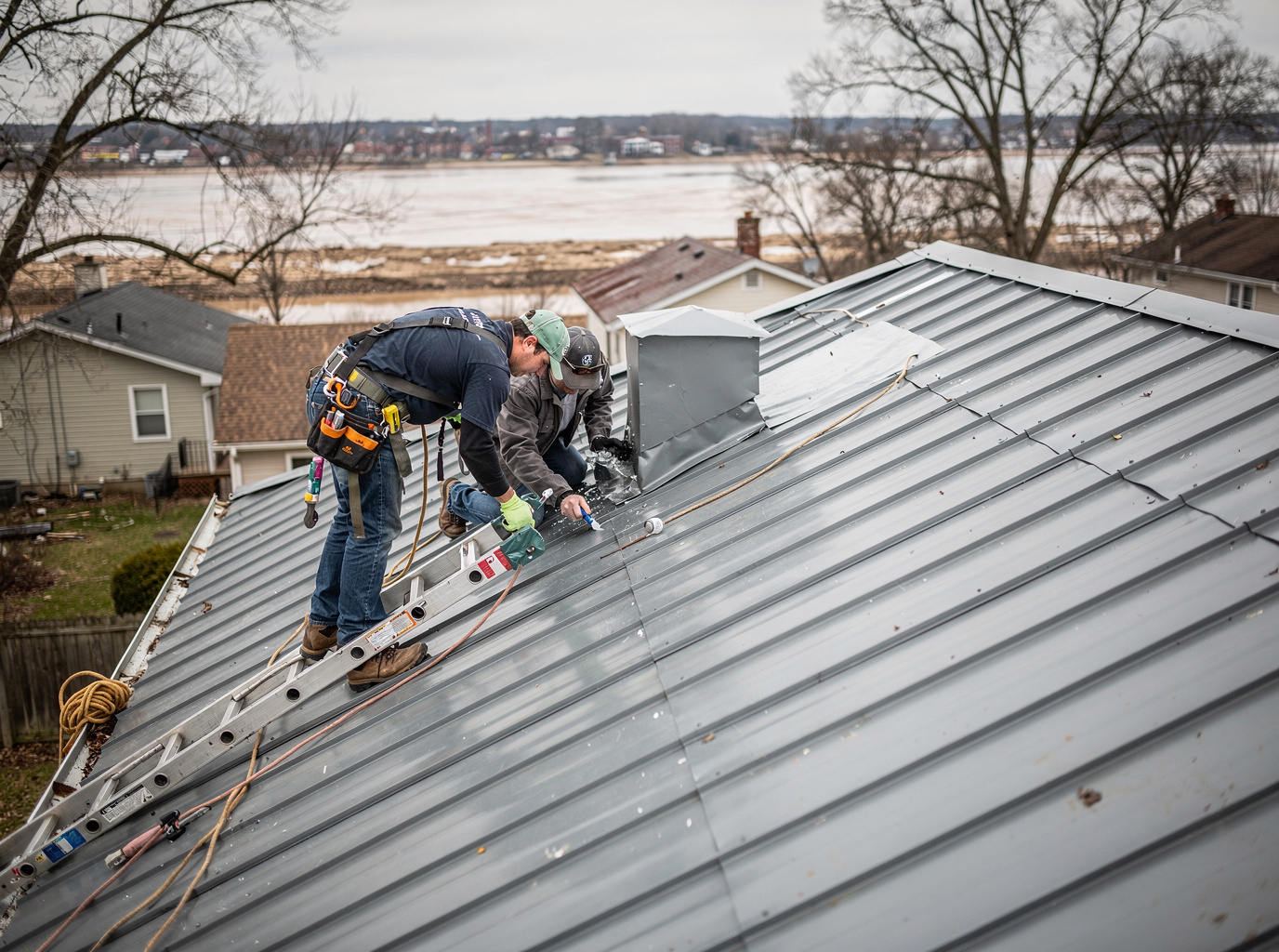
Lower Town Arts District is one of Paducah's oldest neighborhoods, full of restored shotgun houses, cottages, and converted studio buildings dating back well over a century. When we install or repair metal roofing here, we're almost always dealing with older roof decking, irregular framing, and rooflines that were never designed with modern materials in mind. That changes how we approach flashing, fastening, and ventilation compared to a newer subdivision build.
Because so many properties along Jefferson Street and North 6th near the National Quilt Museum are also live-work art spaces, we schedule around gallery hours and foot traffic tied to art walks and events at the Paducah Convention Center. Narrow lots and tight setbacks between houses in this part of McCracken County also mean staging materials and ladders takes more planning than a typical Paducah job.
Humid subtropical summers push a lot of heat and moisture into these older attics, and that combination speeds up deck rot on homes that still have original wood sheathing. A properly installed standing seam or metal shingle roof handles that heat far better than aging asphalt, but only if the substrate underneath is sound — something we always check before quoting work in this district.
Around Lower Town Arts District
We regularly work near:
- 📍National Quilt Museum
- 📍Jefferson Street art studios
- 📍Paducah Riverfront
- 📍Floodwall Murals
- 📍Paducah Convention Center
Metal Roof Installation in Lower Town Arts District — Local Notes
- •Many homes are early-1900s shotgun and cottage-style structures with original wood decking that needs inspection before any metal roof goes on top
- •Narrow lots and shared driveways near Jefferson and Madison Streets limit equipment staging, so smaller crews and careful material staging are standard here
- •Steep, humid Paducah summers accelerate moisture buildup in older attics, making proper ridge and soffit ventilation under new metal roofing a priority
- •Proximity to the riverfront and floodwall means some properties see higher wind-driven rain, so flashing detail around chimneys and dormers gets extra attention